
Skip to content
Web Delivery LabStrategy. Design. Build. Operate.
Resources

CMS

A CMS clients can actually use

Content model, roles, workflows and metadata must match the real website.

A CMS clients can actually use

The CMS must follow the page structure

If important content still lives in code, the client cannot operate the site independently. A useful CMS has collections that match the site: pages, articles, FAQ, case studies, process steps, AI capabilities and brand notes.

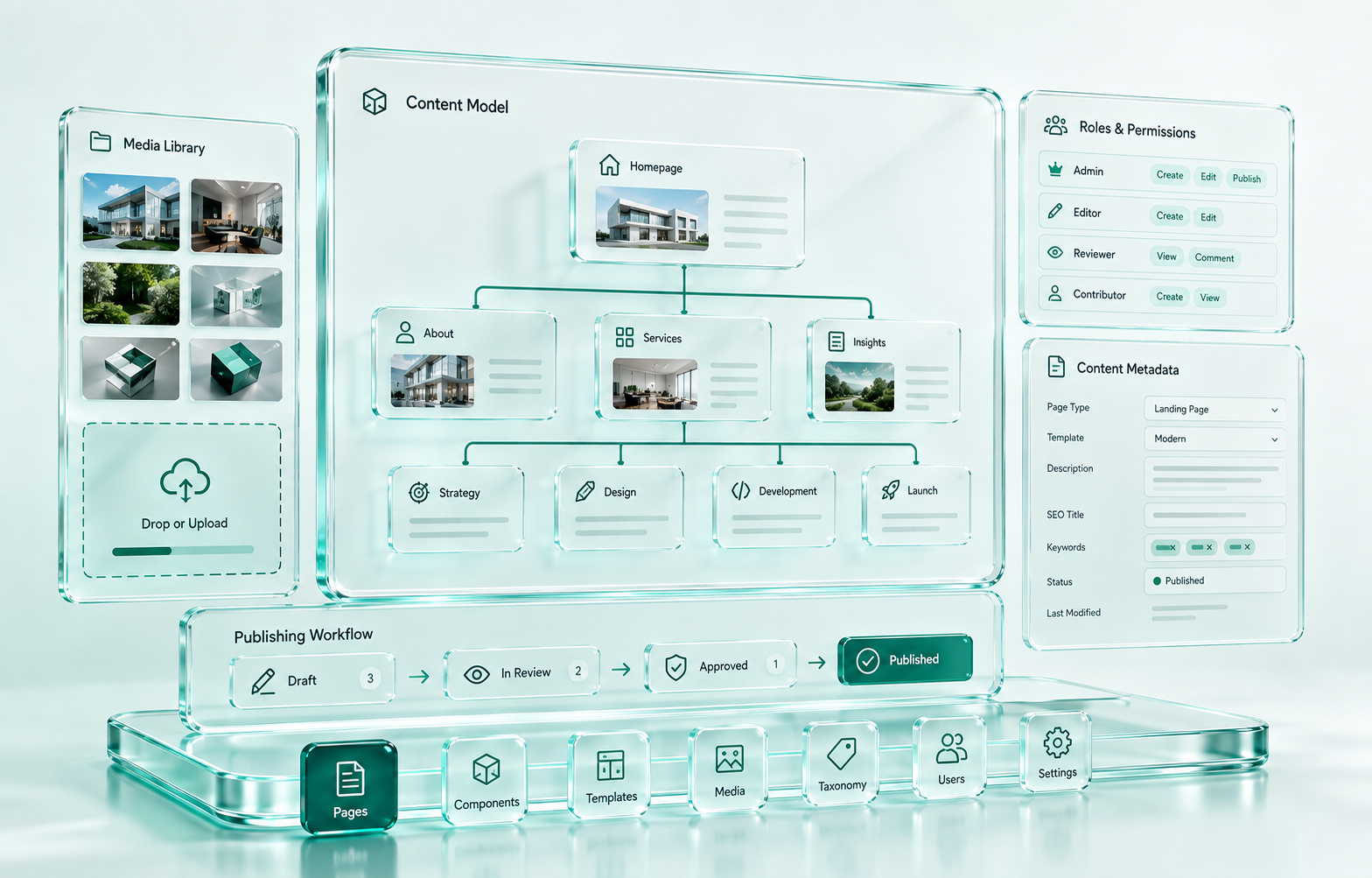
CMS dashboard with content model, media library, roles and workflow
The content model should reflect how the website actually renders.

Roles and workflow

Admin needs clear ownership: who writes, who reviews and who publishes. In a bilingual project, Vietnamese is the source and English is the translation, so translation status should be visible in admin.

Project brief and content assets mapped for CMS
The initial brief determines CMS collections and fields.

Metadata is not an afterthought

Each article and page should carry title, description, featured image, canonical, hreflang and suitable structured data. Once the CMS stores these fields, the SEO plugin and sitemap can stay reliable.


SEO metadata, canonical, hreflang and structured data illustration
Metadata is part of the content model, not a side note.

READ NEXT

Related resources

Launch readiness

QA, redirects, analytics, backup and monitoring must be ready before go-live.

Read article →

SEO metadata basics

Title, description, canonical, hreflang and structured data should be managed systematically.

Read article →

POS and omnichannel operations

Inventory, order sync, payment and reporting should run in one workflow.

Read article →